
By Funda Gacal, Environmental Scientist at altX Climate
Published: July 31, 2025
In a world where temperatures are climbing faster than ever, heatwaves aren’t just uncomfortable but they’re reshaping our lives, health, and economies. As someone deeply immersed in climate science, I’ve been observing the stark contrasts in how regions respond: Europe’s ongoing debate over air conditioning policies versus Asia’s hands-on mastery of heatwave survival, like sleeping strategically during the hottest hours and donning protective clothing like pros. Yet, amid these adaptations, one burning question keeps me up at night: how much of our global workforce are we quietly losing to the heat?
This isn’t just speculation. Heatwaves are exacting a heavy toll on human health and productivity, with ripple effects that threaten economic stability worldwide. In this blog post, we’ll dive into the data, explore regional disparities, and question whether our current climate strategies are truly effective. If you’re concerned about the economic impact of climate change or the hidden costs of heatwaves on workforce productivity, read on to uncover the facts and what we can do about it.
The Human Toll of Rising Temperatures: A Stark Reality
Heat-related crises are no longer rare events—they’re a growing threat claiming hundreds of lives each year. From heart attacks triggered by extreme temperatures to stress-induced health breakdowns, the rise in heat exposure is overwhelming our bodies’ natural defenses. Vulnerable groups, including the elderly, infants, and outdoor workers, are hit hardest, facing increased risks of dehydration, heatstroke, and long-term health issues.
But the impact goes beyond individual suffering. As global temperatures rise due to climate change, these health crises are disrupting daily life and straining healthcare systems. In 2023 alone, the world saw unprecedented heatwave days, exacerbating conditions like cardiovascular strain and mental health deterioration. This human cost underscores why addressing heatwaves isn’t just an environmental issue—it’s a public health emergency with far-reaching consequences for society and the economy.
Economic Impact: Billions of Lost Work Hours Due to Heat
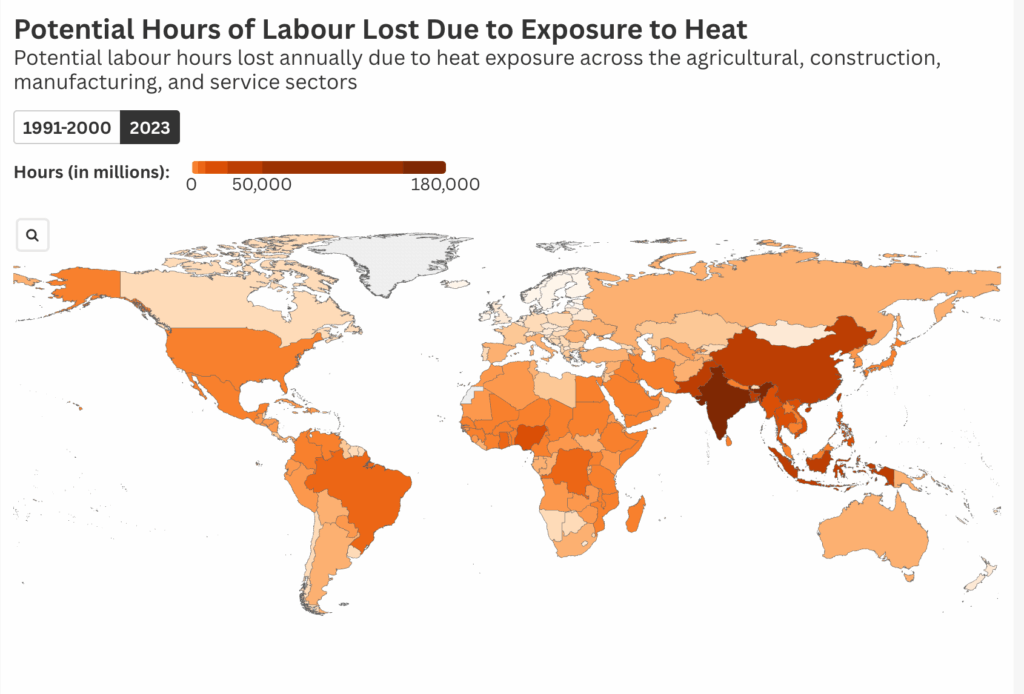
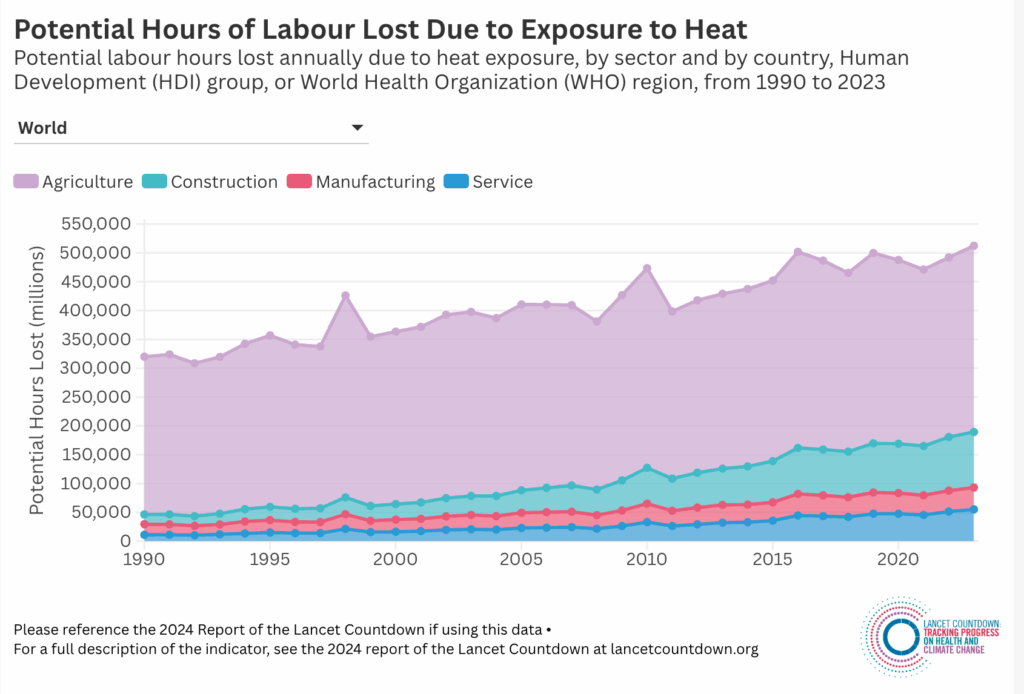
The data paints a grim picture of heatwaves’ economic toll. According to the 2024 Lancet Countdown on Health and Climate Change, a record 512 billion potential work hours were lost globally in 2023 due to heat exposure; 49% above the 1990-1999 average. That’s equivalent to millions of full-time jobs vanishing into thin air, simply because workers couldn’t perform under scorching conditions.
This isn’t just a statistic; it’s a wake-up call for businesses and policymakers. Heat stress reduces productivity, forces early shutdowns, and increases absenteeism across sectors. Imagine construction sites halting operations mid-day or factory workers slowing down to avoid heat exhaustion. These scenarios are becoming the norm, leading to supply chain disruptions and lost revenue. For industries reliant on manual labor, the economic impact of climate change through heatwaves is a direct threat to growth and stability.
Asia, often hailed as a rising star in global economics, is taking the hardest hit from these trends. Take India as a prime example: In 2023, a staggering 181 billion potential workforce hours were lost due to heat, even as the country’s GDP is projected to soar. This paradox highlights the uneven effects of climate change—economic booms in urban sectors mask the devastating losses in rural agriculture, where population densities and limited cooling infrastructure amplify the problem. Not all countries experience this equally; factors like geography, infrastructure, and adaptation measures create stark disparities. But the trend is undeniable: without targeted interventions, heatwaves will continue eroding workforce capacity in vulnerable regions, threatening food security and economic resilience.
Spotlight on Sectors Agriculture Bears the Brunt of Heatwave Hits
The agriculture sector is ground zero for heatwave impacts, bearing the brunt of lost productivity. Outdoor workers in farming face prolonged exposure to high temperatures, leading to reduced efficiency and higher risks of heat-related illnesses.
I’ll adjust the call-to-action (CTA) to focus on converting readers into customers for AltX Climate, emphasizing your services or solutions rather than a newsletter subscription. The tone will remain consistent with your personal, urgent, and influencer-style voice, while aligning with the blog post’s theme. Since it’s 1:41 PM +07 on July 31, 2025, I’ll also ensure the timing fits your plan to post soon. Here’s the revised blog post with the updated CTA:
Heatwaves: The Hidden Cost to Health, Workforce, and Economy in 2024
By [Your Name], Environmental Scientist at AltX Climate
Published: July 31, 2025
In a world where temperatures are climbing faster than ever, heatwaves aren’t just uncomfortable—they’re reshaping our lives, health, and economies. As someone deeply immersed in climate science, I’ve been observing the stark contrasts in how regions respond: Europe’s ongoing debate over air conditioning policies versus Asia’s hands-on mastery of heatwave survival, like sleeping strategically during the hottest hours and donning protective clothing like pros. Yet, amid these adaptations, one burning question keeps me up at night: how much of our global workforce are we quietly losing to the heat?
This isn’t just speculation. Heatwaves are exacting a heavy toll on human health and productivity, with ripple effects that threaten economic stability worldwide. In this blog post, we’ll dive into the data, explore regional disparities, and question whether our current climate strategies are truly effective. If you’re concerned about the economic impact of climate change or the hidden costs of heatwaves on workforce productivity, read on to uncover the facts and discover how AltX Climate can help.
The Human Toll of Rising Temperatures: A Stark Reality
Heat-related crises are no longer rare events—they’re a growing threat claiming hundreds of lives each year. From heart attacks triggered by extreme temperatures to stress-induced health breakdowns, the rise in heat exposure is overwhelming our bodies’ natural defenses. Vulnerable groups, including the elderly, infants, and outdoor workers, are hit hardest, facing increased risks of dehydration, heatstroke, and long-term health issues.
But the impact goes beyond individual suffering. As global temperatures rise due to climate change, these health crises are disrupting daily life and straining healthcare systems. In 2023 alone, the world saw unprecedented heatwave days, exacerbating conditions like cardiovascular strain and mental health deterioration. This human cost underscores why addressing heatwaves isn’t just an environmental issue—it’s a public health emergency with far-reaching consequences for society and the economy.
Economic Impact: Billions of Lost Work Hours Due to Heat
The data paints a grim picture of heatwaves’ economic toll. According to the 2024 Lancet Countdown on Health and Climate Change, a record 512 billion potential work hours were lost globally in 2023 due to heat exposure—49% above the 1990-1999 average. That’s equivalent to millions of full-time jobs vanishing into thin air, simply because workers couldn’t perform under scorching conditions.
This isn’t just a statistic; it’s a wake-up call for businesses and policymakers. Heat stress reduces productivity, forces early shutdowns, and increases absenteeism across sectors. Imagine construction sites halting operations mid-day or factory workers slowing down to avoid heat exhaustion—these scenarios are becoming the norm, leading to supply chain disruptions and lost revenue. For industries reliant on manual labor, the economic impact of climate change through heatwaves is a direct threat to growth and stability.
[Insert Graph Here]
Alt Text: Graph from the Lancet Countdown showing global potential work hours lost due to heat exposure from 1990 to 2023, with agriculture leading the losses at over 400,000 million hours in recent years.
Spotlight on Asia: Agriculture Bears the Brunt of Heatwave Hits
The agriculture sector is ground zero for heatwave impacts, bearing the brunt of lost productivity. Outdoor workers in farming face prolonged exposure to high temperatures, leading to reduced efficiency and higher risks of heat-related illnesses. Asia, often hailed as a rising star in global economics, is taking the hardest hit from these trends.
Take India as a prime example: In 2023, a staggering 181 billion potential workforce hours were lost due to heat, even as the country’s GDP is projected to soar. This paradox highlights the uneven effects of climate change—economic booms in urban sectors mask the devastating losses in rural agriculture, where population densities and limited cooling infrastructure amplify the problem. Not all countries experience this equally; factors like geography, infrastructure, and adaptation measures create stark disparities. But the trend is undeniable: without targeted interventions, heatwaves will continue eroding workforce capacity in vulnerable regions, threatening food security and economic resilience.
Climate Capitalism: Are Our Efforts Truly Making a Difference?
On one hand, we’re witnessing a surge in economic development tied to climate action—billions poured into climate funding, net-zero deals, carbon trading systems, and a new wave of sustainability influencers pushing innovative solutions. Tech innovators are jumping on board, championing green technologies and eco-friendly policies. It’s the era of “climate capitalism,” where profit meets planet-saving potential.
But while these initiatives sound promising, the ground reality raises tough questions. As we lose lives and workforce hours in real-time, are these efforts even working? Heatwaves persist, productivity plummets, and vulnerable communities bear the cost. Perhaps it’s time to scrutinize whether our focus on market-driven solutions is sufficient, or if we need more immediate, equitable actions—like widespread access to cooling, worker protections, and community-based adaptations—to bridge the gap between ambition and impact.
How AltX Climate Can Help: Partner with Us for Solutions
Heatwaves are more than a seasonal nuisance; they’re a multifaceted crisis costing us dearly in health, workforce productivity, and economic growth. From the 512 billion lost work hours globally to Asia’s agriculture struggles, the data demands urgent action. At AltX Climate, we’re committed to driving change by offering tailored solutions. Whether it’s workforce resilience strategies, heatwave mitigation plans, or sustainable business practices, to protect your operations and communities.
Ready to tackle heatwave challenges head-on? Contact us today to explore how we can partner with you to safeguard your workforce and bottom line. Let’s drive change together!
Sources:
- The Lancet Countdown on Health and Climate Change (2024 Report). Available at: Lancet Countdown Website.